
Dr. Nedic featured in the new HQ on the topic of dehydrated skin…

Perk up dull skin from top to toe with advice from skincare specialists
By Tammy Jacks
After several months of cold weather and central heating (and the constant changing between the two), it’s no surprise that skin is left looking dull, dry and clogged. Why does this happen? Experts believe that because cold air contains up to 30% less moisture than warm air, it strips the skin of vital moisture. Colder temperatures also make the natural fats in the skin stiffen, so they’re not as flexible, meaning the skin is more prone to cracking, says dermatologist Dr Leslie Baumann, author of The Skin Type Solution. Before you decide on an action plan to target dryness, it’s important to identify whether your skin is just dry, dehydrated or both.
Dry vs dehydrated skin
“Dry skin can be a lifelong or temporary condition where the skin generally lacks sufficient oil. However, if your skin is dry and oily or sensitive and inflamed in parts, there’s a good chance it’s dehydrated too,” says aesthetic and anti-ageing practitioner Dr Sly Nedic. Dry, normal and even very oily skin can be dehydrated. This is especially true in South Africa, where we have different climates. Cold winds in the Cape, dry, cold weather in the Highveld, or varying degrees of humidity in areas such as KwaZulu- Natal all contribute to dehydrated skin. The reason is that cold air and temperature fluctuations break down the skin’s natural lipid barrier, and as a result, moisture escapes from the deeper layers of the skin, leaving it feeling dry and sensitive. Dr Nedic believes that skin ageing is another major factor affecting how dry or dehydrated it becomes.
“With age, our skins may produce less sebum and cell renewal slows down. This contributes to a build-up of dead skin cells on the surface, often resulting in a dry, dull complexion. When the skin is also dehydrated, it generally feels tighter or scalier and is more prone to irritation than with dryness alone. This can worsen skin conditions such as acne because the skin is even more susceptible to inflammation,” she says.
Body care
In addition to your face, areas on your body can also suffer from extreme dryness in winter. Stretch marks, cracked lips, hands and feet, uneven skin tone and poor circulation may be more likely, so it’s important to keep your skin hydrated with a good skincare regimen to prevent tightness and cracks from forming, says Kelly Reynolds, skincare product manager at NeoStrata. But it’s not all bad news … Here are simple, yet effective solutions to some of your most common winter skincare concerns.
Skincare concern
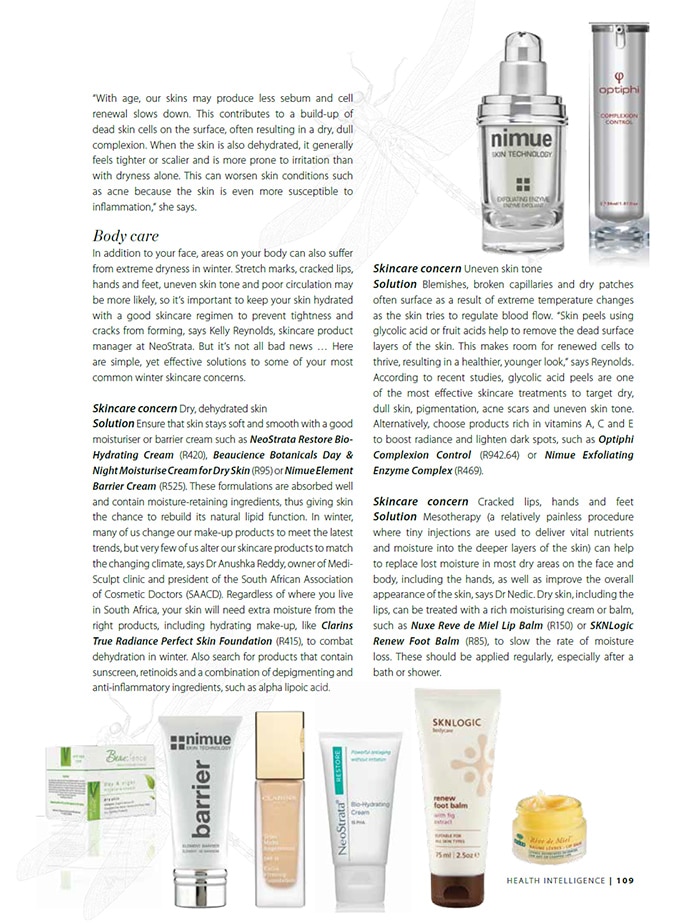
Dry, dehydrated skin Solution Ensure that skin stays soft and smooth with a good moisturiser or barrier cream such as NeoStrata Restore Bio- Hydrating Cream (R420), Beaucience Botanicals Day & Night Moisturise Cream for Dry Skin (R95) or Nimue Element Barrier Cream (R525). These formulations are absorbed well and contain moisture-retaining ingredients, thus giving skin the chance to rebuild its natural lipid function. In winter, many of us change our make-up products to meet the latest trends, but very few of us alter our skincare products to match the changing climate, says Dr Anushka Reddy, owner of Medi- Sculpt clinic and president of the South African Association of Cosmetic Doctors (SAACD). Regardless of where you live in South Africa, your skin will need extra moisture from the right products, including hydrating make-up, like Clarins True Radiance Perfect Skin Foundation (R415), to combat dehydration in winter. Also search for products that contain sunscreen, retinoids and a combination of depigmenting and anti-inflammatory ingredients, such as alpha lipoic acid.
Skincare concern
Uneven skin tone Solution Blemishes, broken capillaries and dry patches often surface as a result of extreme temperature changes as the skin tries to regulate blood flow. “Skin peels using glycolic acid or fruit acids help to remove the dead surface layers of the skin. This makes room for renewed cells to thrive, resulting in a healthier, younger look,” says Reynolds. According to recent studies, glycolic acid peels are one of the most effective skincare treatments to target dry, dull skin, pigmentation, acne scars and uneven skin tone. Alternatively, choose products rich in vitamins A, C and E to boost radiance and lighten dark spots, such as Optiphi Complexion Control (R942.64) or Nimue Exfoliating Enzyme Complex (R469).
Skincare concern
Cracked lips, hands and feet Solution Mesotherapy (a relatively painless procedure where tiny injections are used to deliver vital nutrients and moisture into the deeper layers of the skin) can help to replace lost moisture in most dry areas on the face and body, including the hands, as well as improve the overall appearance of the skin, says Dr Nedic. Dry skin, including the lips, can be treated with a rich moisturising cream or balm, such as Nuxe Reve de Miel Lip Balm (R150) or SKNLogic Renew Foot Balm (R85), to slow the rate of moisture loss. These should be applied regularly, especially after a bath or shower
Dry, normal and even very oily skin can be dehydrated. This is especially true in South Africa, where we have different climates
Skincare concern
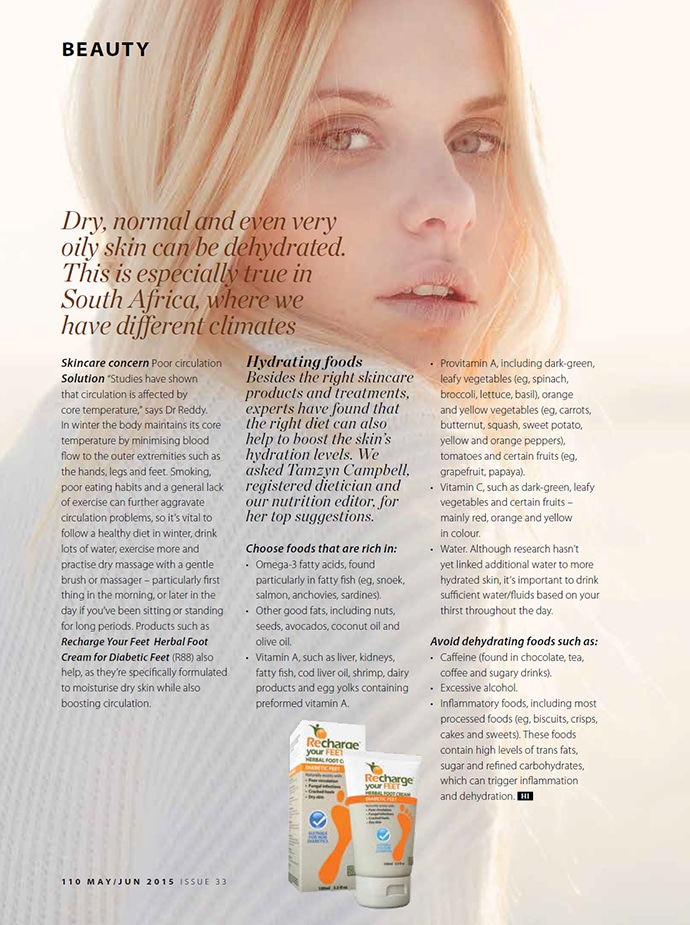
Poor circulation Solution “Studies have shown that circulation is affected by core temperature,” says Dr Reddy. In winter the body maintains its core temperature by minimising blood flow to the outer extremities such as the hands, legs and feet. Smoking, poor eating habits and a general lack of exercise can further aggravate circulation problems, so it’s vital to follow a healthy diet in winter, drink lots of water, exercise more and practise dry massage with a gentle brush or massager – particularly first thing in the morning, or later in the day if you’ve been sitting or standing for long periods. Products such as Recharge Your Feet Herbal Foot Cream for Diabetic Feet (R88) also help, as they’re specifically formulated to moisturise dry skin while also boosting circulation.
Hydrating foods Besides the right skincare products and treatments, experts have found that the right diet can also help to boost the skin’s hydration levels. We asked Tamzyn Campbell, registered dietician and our nutrition editor, for her top suggestions.
Choose foods that are rich in:
- Omega-3 fatty acids, found particularly in fatty fish (eg, snoek, salmon, anchovies, sardines).
- Other good fats, including nuts, seeds, avocados, coconut oil and olive oil.
- Vitamin A, such as liver, kidneys, fatty fish, cod liver oil, shrimp, dairy products and egg yolks containing preformed vitamin A.
- Provitamin A, including dark-green, leafy vegetables (eg, spinach, broccoli, lettuce, basil), orange and yellow vegetables (eg, carrots, butternut, squash, sweet potato, yellow and orange peppers), tomatoes and certain fruits (eg, grapefruit, papaya).
- Vitamin C, such as dark-green, leafy vegetables and certain fruits – mainly red, orange and yellow in colour.
- Water. Although research hasn’t yet linked additional water to more hydrated skin, it’s important to drink sufficient water/fluids based on your thirst throughout the day.
Avoid dehydrating foods such as:
- Caffeine (found in chocolate, tea, coffee and sugary drinks).
- Excessive alcohol.
- Inflammatory foods, including most processed foods (eg, biscuits, crisps, cakes and sweets). These foods contain high levels of trans fats, sugar and refined carbohydrates, which can trigger inflammation and dehydration.